Wednesday, October 9, 2019

Revising Your Argument

Content is from 
https://owl.excelsior.edu/argument-and-critical-thinking/revising-your-argument/


Revising Your Argument
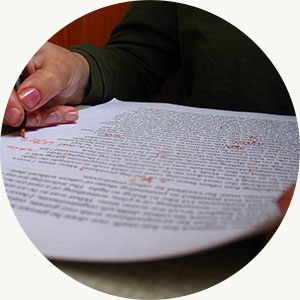
A pen on a document that has many red revisionsJust as you would revise and edit any piece of writing, you’ll want to be sure to spend time revising and editing your argument.
First, it’s important to remember that revising and editing are different steps in the process. When you revise, you’re making changes to content, organization, source material, and more. When you edit, you’re making changes at the sentence level and looking for things like grammatical errors, punctuation errors, and typos.
Both of these will be an important part of your argumentative process.


Revising Your Argument


Tuesday, March 12, 2019

Eliminate Wordiness

ThoughtCo. | Lifelong Learning
Languages
How to Eliminate Deadwood From Your Writing
What we cut out of our writing is sometimes more important than what we put in. Here's how to cut the deadwood in your writing.

READ NOW

Monday, March 4, 2019

Plagiarism Audio Discussion

Plagiarism in the real world


January 10, 200212:00 AM ET

Guest Host Melissa Block talks with Thomas Mallon, author of Stolen Words: Forays into the Origins and Ravages of Plagiarism, about the discovery of plagiarism by well-known authors such as Steven Ambrose, and research techniques which should help avoid the problem. (4:30) Stolen Words is published by Harvest Books, April 2001. Mallon is also author of the Mrs. Paine's Garage and the Murder of John F. Kennedy, published this month by Pantheon Books.


To reach the original site where this audio is housed, visit https://www.npr.org/templates/story/story.php?storyId=1136141?storyId=1136141

Wednesday, February 27, 2019

Revising Jargon and Slang


Home » Language » Difference Between Jargon and Slang


Difference Between Jargon and Slang
October 21, 2015
by admin
3 min read
Main Difference – Jargon vs. Slang

Both jargon and slang are two special types of language varieties. The main difference between Jargon and Slang is, Jargon is terminology that is used in relation to a specific activity, profession, group, or event whereas slang is the use of informal words and expressions that are not considered standard in the speaker’s dialect or language. 

REVIEW: Diction


Review: Diction

Decide whether the highlighted word or phrase in each of the following examples is appropriate in formal writing.

Connotation and Denotation


Connotation and Denotation

The relationship between words and meanings is extremely complicated and belongs to the field of semantics. What you need to remember is that most words do not have single, simple meanings. 

Revising Catchphrases: overused phrases and sentences


Catchphrases

Previous Page                                                                                                  Next Page

Against a tight deadline or under pressure, a writer will naturally use familiar verbal patterns rather than thinking up new ones. Inexperienced writers, however, will sometimes go further and string together overused phrases or even sentences. 

Revising Diction...word choice in your writing

TampaWebDesigners

Revising Diction:

Previous Page                                                                                           Next Page


Diction

Diction is simply your choice of words.

Revising Paragraphs: Review Your Comprehension of the Lessons

Developing Unified and Coherent Paragraphs

Have you finished revising your body-paragraphs?  Do you want to check to make sure that you fully understand how to revise paragraphs for unity and conciseness?  Click the Review Paragraph Development link below and then complete the exercises.  After that, return here to learn about revising the DICTION in your writing.

Review: Paragraph Development


Monday, February 25, 2019

Approaching Revision--The 1st Time Through


The 1st Revision
If you are at the Revision stage of the Writing Process, then you have already taken the time to gather your ideas, organize those ideas into an outline, drafted a rough draft of the essay, and now you are ready for your first Revision—yes, the first revision.  The Writing Process can—and should—be a reoccurring cycle.  You may have to go through some of these stages numerous times before the structure, content, and support are correctly organized into a version worthy of publishing. 

Revision is a Cyclical Process

Revising at the Essay-level


Revision at the Essay-Level
Revising at the essay-level involves reading the THESIS, TOPIC-SENTENCES, and CLOSING SENTENCE of the CONCLUSION PARAGRAPH to determine whether all areas are focused on one overarching point.  The whole essay must flow in a way that there is no extraneous information, personal anecdotes, or wayward background and details.  When you revise at the essay-level, you need to make sure that the whole essay is focused on one point and that one point is clearly and logically asserted throughout the writing.

Revising at the Paragraph-level


Revising at the Paragraph-level
Revising at the paragraph-level involves reading the paragraphs of your essay for unity and coherence of thought.  This means that each paragraph needs to be a ‘little nugget’ of information, focused on one concept, idea, or topic. 

Revising at the Sentence-level


The first thing you want to do when revising is to look at your content at three levels: sentence-level, paragraph-level, and at the essay-level. 


Revising at the Sentence-level

Revising at the sentence-level involves reading the sentences of your writing for completeness, clarity, and purpose.  Do not read the sentences one after another.  If you read them as blocks of content, you will miss revision issues to correct.  You want to read a sentence—by itself—without connecting it to the sentence prior or after.  

Revision is a Necessary Stage in the Writing Process


Revising: The 4th Stage in the Writing Process

Revising is an important part of the Writing Process.  Each stage of the Writing Process provides your writing with more polish and professionalism that cannot be met if stages are skipped.  

Thursday, February 21, 2019

Eliminate these Words


Taboo words in academic writing


When you are writing [an academic essay], many words and phrases that are acceptable in conversations or informal writing are considered inappropriate.
You should try to avoid expressions that are too informal, unsophisticated, vague, exaggerated, or subjective, as well as those that are generally unnecessary or incorrect.

Use Qualifiers Wisely


What this handout is about
This handout will explain what qualifiers are and how you can use them wisely.
Introduction
Qualifiers and intensifiers are words or phrases that are added to another word to modify its meaning, either by limiting it (He was somewhat busy) or by enhancing it (The dog was very cute). Qualifiers can play an important role in your writing, giving your reader clues about how confident you feel about the information you’re presenting. In fact, “hedging” (as it is sometimes called) is an important feature of academic writing because academic writers need to clearly indicate whether they think claims are certain, likely, unlikely, or just false. But excessive use of qualifiers can make you sound unsure of your facts; it can also make your writing too informal.

Don't Sabotage Yourself by Using Weak Language!!

While the article below is about verbal sabotage, consider this advice as GOLD for academic writing as well.  Eliminate words that undermine the strength or your argument, and by extension, undermine YOU!


Bonnie Marcus                                                                                                                                 Dec 9, 2011, 10:29am

The ability to communicate effectively and confidently has a dramatic effect on our ability to advance our careers. Yet many of us fall into the trap of using weak language that sabotages our efforts to present ourselves with authority and confidence.

I would just like to say that I may not know as much as some of the communication experts out there, but I feel that women undermine their credibility time and time again by using minimizing language.

This one sentence says it all! By using the words “just”, “I feel”, and stating that I may not have as much expertise as perhaps others do, I have reduced my credibility to almost zero! How many times have you heard women communicate this way? How many times have you yourself used this type of minimizing language?

Eliminate Weak Terms


When writing an argument paper, you need to assert your views clearly and logically.  However, it is also necessary to make the argument imperative by using words such as must and require.

Connect Ideas through Transitional Terms


Transitional terms that serve as academic connectors within sentences, between sentences, between paragraphs, and to unify an essay.  

Contrast
In spite of / Despite
Link two contrasting ideas. Followed by a noun phrase
Although / (Even) though
Link two contrasting ideas. Followed by a sentence.
However
Nevertheless
Still / Yet
Even so
On the contrary
In contrast
Introduce a new idea which marks a contrast with previously stated ideas. Used after a strong pause and separated from the sentence they introduce by a comma.
On the one hand ... on the other hand
Links two contrasting ideas/paragraphs.
In contrast to
Contrary to
Link two contrasting ideas. Followed by a noun phrase.
whereas
Link two contrasting ideas. Not separated by commas.